

At the Agentic Core Summit held during MWC 2026, Huawei officially unveiled the next-generation Telco Intelligent Converged Cloud solution: TICC 2.0. This solution is designed to assist operators in building forward-looking AI infrastructure, and support them to develop and innovate AI services. During the summit, Huawei, in collaboration with global industry partners, launched the Diversified Telco Cloud Computing Power Initiative. This marks a strategic consensus within the industry to establish open, converged AI infrastructure, and expedite the transition of telecom networks into the AI-native era.
The AI Era Heralds a New Wave of Upgrades to Telco Cloud Infrastructure
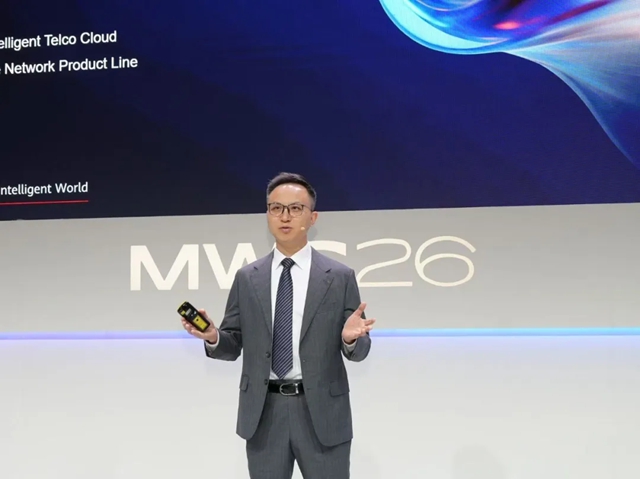
Over the past decade, telecom networks have evolved from traditional embedded systems to virtualized and cloud-native architectures, driven by advancements in cloud technologies. Now, in the AI era, these networks are undergoing a shift from cloud-native to AI-native, with new trends emerging in telco clouds. During his keynote speech, Frank Lin, President of Huawei's Intelligent Telco Cloud Domain, emphasized the rapid deployment of bare metal containers alongside AI, noting that the technical architecture for AI-native will become more defined by 2026. The Linux Foundation has initiated the Agentic AI Foundation, and both ETSI and TM Forum have launched AI-native projects, clarifying the path toward the intelligent transformation of telecom networks.
TICC: the Next-Generation Intelligent Telco Cloud
In response to these industry trends, Huawei introduced the TICC 2.0 solution at the summit. This solution is built on enhanced K8s AI open-source technologies and the latest training and agent platforms, and leverages Huawei's Uni-bridge 2.0 hardware to create a hyper-converged carrier-grade server cluster. The cluster integrates intelligent computing, general-purpose computing, network switching, and storage resources.
According to the introduction, TICC has three core capabilities: ultimate performance, simplified onboarding, and integrated general-purpose and intelligent computing. The high-performance hardware architecture and high-speed bus (UnifiedBus) technology eliminate the performance bottlenecks of traditional CPU-centric buses. The D2D bandwidth is 10 times higher than that of PCIe, and the AI inference latency is reduced by over 70%. xPU resource pooling and virtualization technologies boost resource utilization by 50%, and cut inference costs by 30%.
TICC also supports the co-deployment of general-purpose and intelligent computing servers within the same chassis. It achieves unified scheduling and management of both types of computing resources from a single cloud platform. This allows for the flexible deployment of various services on the same cloud, safeguarding operators' investments and providing room for the future evolution of intelligent services.
Simplified Delivery and Intelligent O&M Accelerate the Implementation of AI Infrastructure
In terms of delivery and O&M, TICC focuses on providing an out-of-the-box and plug-and-play deployment experience. Utilizing technologies like pre-integration, pre-installation, and pre-verification, onsite deployment eliminates the need for complex cabling and configuration. This reduces the delivery time from months to just one week, vastly improving the speed of service rollout. Additionally, the system supports automatic discovery, networking, and testing, allowing new servers to go online within 30 minutes.
In terms of O&M, the solution works with the MDAF intelligent O&M platform to achieve visualization across all domains and intelligent analysis of infrastructure. It also supports minute-level cross-layer fault locating and unified upgrade management. This substantially enhances O&M efficiency and ensures the stable operation of telecom networks.
Diversified Telco Cloud Computing Power Initiative Launched
At the summit, industry partners jointly launched the Diversified Telco Cloud Computing Power Initiative. This initiative calls on operators and industry partners to collaborate in building telco cloud infrastructure that integrates general-purpose and intelligent computing. The goal is to establish a unified computing power foundation to support innovative services emerging in the AI era. This initiative aims to foster collaborative development of the industry in terms of architecture, technology, and the ecosystem, accelerating the transition of telecom networks to AI-native.
Huawei noted that the uses of AI are expanding, and a new era has emerged. Now, telco cloud will play a crucial role in driving AI service innovation and industry advancement. Huawei aims to collaborate with industry partners to transform telecom infrastructure, expedite the shift towards AI-native operations, and ensure business success for operators.