

Carbon reduction is a long-term national strategy for China—and a global consensus. Solar PV is the key to peaking emissions and reaching net zero. With mature supply chains and strong scale effects built over decades, the sector now sees manufacturers from across the globe racing to capture their share of the zero-carbon future.
That future was on full display in Munich on June 23, as Intersolar Europe 2026 kicked off. The world's largest and most specialized solar exhibition, it drew over 2,800 exhibitors from around the globe to showcase the latest PV technologies and innovations. ZTT made a strong impression under the banner "ZTT Solutions for a Low-Carbon Future," with its full-scenario, system-integrated solar-storage-hydrogen solutions capturing widespread interest.
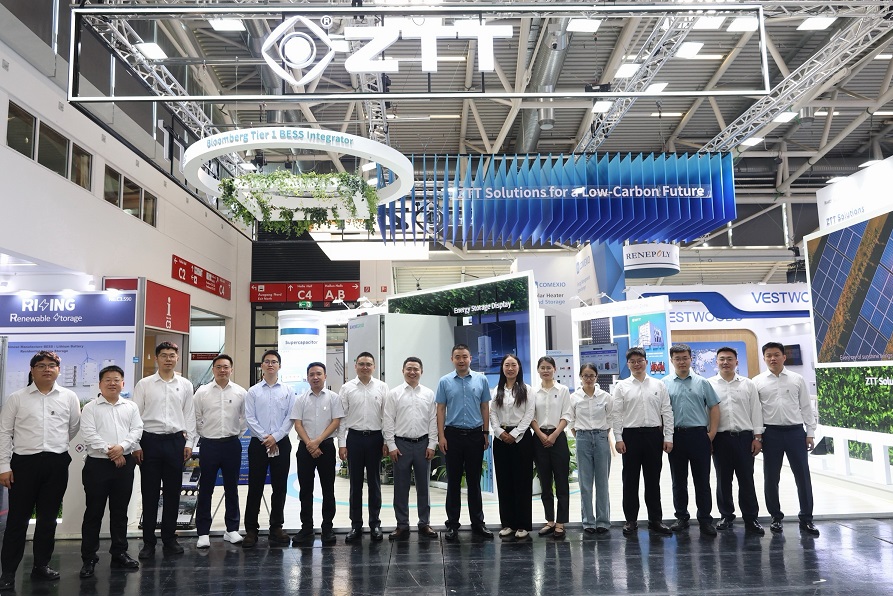
During the event, Tan Qingwu, Chief Engineer of ZTT's New Energy Industry Group, sat down with C114 for an exclusive interview, discussing the company's competitive strengths, business expansion, and global footprint in the PV sector.
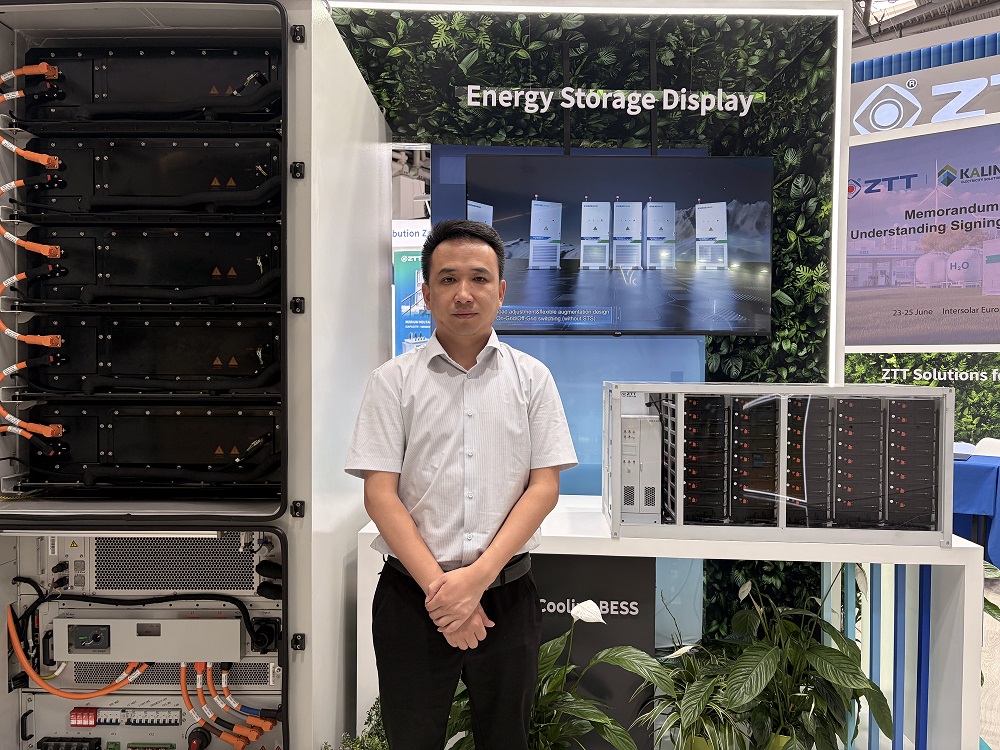
Tan Qingwu, Chief Engineer of ZTT's New Energy Industry Group
Solar-Storage-Hydrogen Integration Forges a Competitive Edge
This year's Intersolar has brought together the PV industry's biggest names. So how does ZTT stand out among the crowd?
Tan Qingwu noted that for energy storage, ZTT highlighted its new-generation large-scale liquid-cooled container energy storage systems and tailored commercial & industrial storage solutions for energy-hungry European enterprises. These products offer gains in both energy density and thermal management efficiency, with powerful grid-forming capability to stabilize Europe’s increasingly strained power grids.
In the PV and supporting segments, ZTT featured high-efficiency modules, industry-leading dedicated cables and microgrid control systems. "We also put green hydrogen technologies—including high-performance electrolyzers—in the spotlight, showing European customers how power-hydrogen coupling can crack the challenges of long-duration storage and deep decarbonization," Tan added.
In Tan’s view, ZTT’s real edge lies in full-industry-chain integration and system-level delivery.
"The market has moved beyond price wars over standalone hardware. Clients want a one-stop partner that knows the grid, gets system design, and delivers on performance," he said. ZTT brings deep know-how in storage plant construction and microgrids. It makes its own cells, BMS and PCS, with EMS fully integrated in-house, and has built a complete green hydrogen value chain running on renewables. This solar-storage-hydrogen synergy breaks down traditional silos, offering customers truly integrated microgrid and zero-carbon solutions.
Global Manufacturing, Localized Services
On top of its competitive product portfolio, ZTT's early global push and its well-established worldwide operations give it a further edge.
"Global manufacturing, localized services" is ZTT's core strategy, Tan noted. With industrial bases and offices in Poland, Turkey, Morocco and beyond, the company has built a full-fledged European network spanning sales, delivery and after-sales support.
According to Tan, ZTT's global presence delivers two key benefits for its overseas new energy business. "One is supply chain resilience. In today's complex trade landscape, our multi-region manufacturing footprint allows us to adapt swiftly to customer needs while mitigating trade risks," he said. "The other is local responsiveness. Given the tight delivery timelines and maintenance typical of new energy projects, our local-based teams offer seamless technical support—no language barriers, no time-zone lags—ensuring we stay closely aligned with our clients." Europe is a prime example. As the first region to enshrine carbon neutrality in law and pursue a systematic green transition, it has long led the low-carbon charge—backed by strong policy frameworks, hefty capital inflows and a mature carbon market. Unsurprisingly, it has become a fiercely competitive arena for new energy players.
"We've seen PV and wind penetration go through the roof, and that's created real grid bottlenecks and instability across Europe," Tan observed. "So the focus is shifting—from just generating power to keeping the grid steady. That's behind the boom we're seeing in utility-scale and C&I storage." To tap into this demand, ZTT is pushing ahead in Europe with three key moves:
First, technical compliance—all products rigorously meet the EU Battery Regulation, cybersecurity standards and carbon footprint certification. Second, grid-centric solutions, with grid-forming storage taking center stage to tackle frequency regulation and peak-shaving challenges. Third, ecosystem collaboration—ZTT is forging deep strategic partnerships with local system integrators and utilities, positioning itself as a long-term value partner rather than just a supplier.
Tan added that ZTT has built a solid track record across Europe, from large-scale infrastructure to a broad range of C&I applications. One standout example: a 24MWh storage project for Deutsche Telekom, Europe's premier telecom operator with exacting standards on safety, stability and data compliance. ZTT delivered a customized liquid-cooled storage system that ensures both power security and grid interaction at the operator's communication hubs. The milestone also underscores that ZTT's storage solutions have cleared the high bar set by Europe's Tier-1 clients.
In another example, ZTT has delivered multiple 500kW to 2MWh C&I storage projects for Bulgarian customer PS Electric. Tailored to local enterprises' consumption patterns and their drive to cut power costs, the integrated solutions enable effective peak shaving to significantly reduce energy bills. The projects also showcase ZTT's full-cycle capability—from rapid response to flexible delivery—in Europe's emerging markets.
Running to Win the Net-Zero Race
Through its Intersolar showcase and project deliveries across Europe, ZTT has made clear its ambition as a global new energy player. The two representative projects underscore its core strengths in market expansion: best-in-class product reliability and compliance, full-scenario customization, and localized delivery backed by service expertise. ZTT is not just selling products—its local teams also offer full lifecycle support, from solution design and grid-connection testing to long-term O&M.
Tan stressed that while low-carbon is a shared global goal, net zero is the ultimate answer to curbing global warming—and that leaves immense room for the PV market to grow. "To win this marathon, we have to be fully prepared across technology, products and market strategy," he said.
Going forward, ZTT is stepping up R&D across solar, storage and hydrogen to sustain its technology lead. On the product front, the focus is on simplified installation, tougher safety standards and digital lifecycle management, with AI woven into its EMS for smarter energy optimization. Strategically, the company is rolling out an Overseas Expansion 2.0 initiative—no longer just shipping products abroad, but exporting its technologies, standards and brand equity.
With the Paris Agreement's temperature targets as a backdrop, the global shift toward low-carbon and net-zero energy is unmistakably irreversible. ZTT is embracing that future with concrete actions—writing its own chapter in the globalization story of Chinese new energy enterprises.